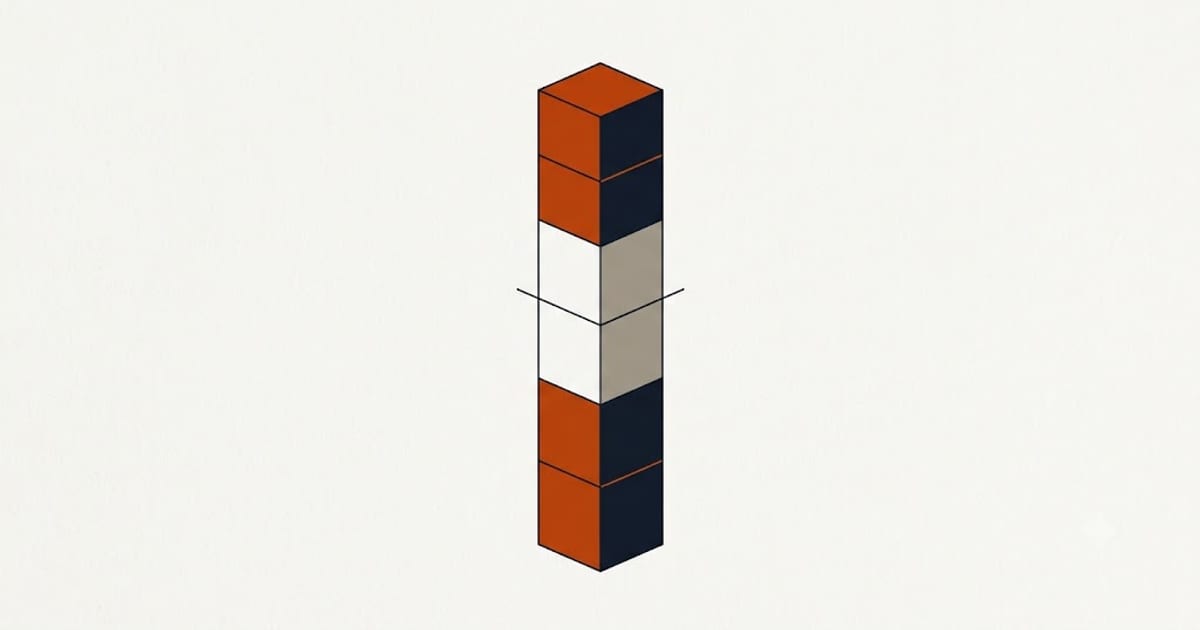
The most common reason a site fails for a conventional septic system is not that the soil drains too slowly. It is that there is not enough dry soil between the trench and the water.
Why separation matters
A drainfield does not dispose of effluent; it treats it. The treatment happens as the liquid moves down through unsaturated soil, where oxygen, bacteria and soil particles remove pathogens and nutrients.
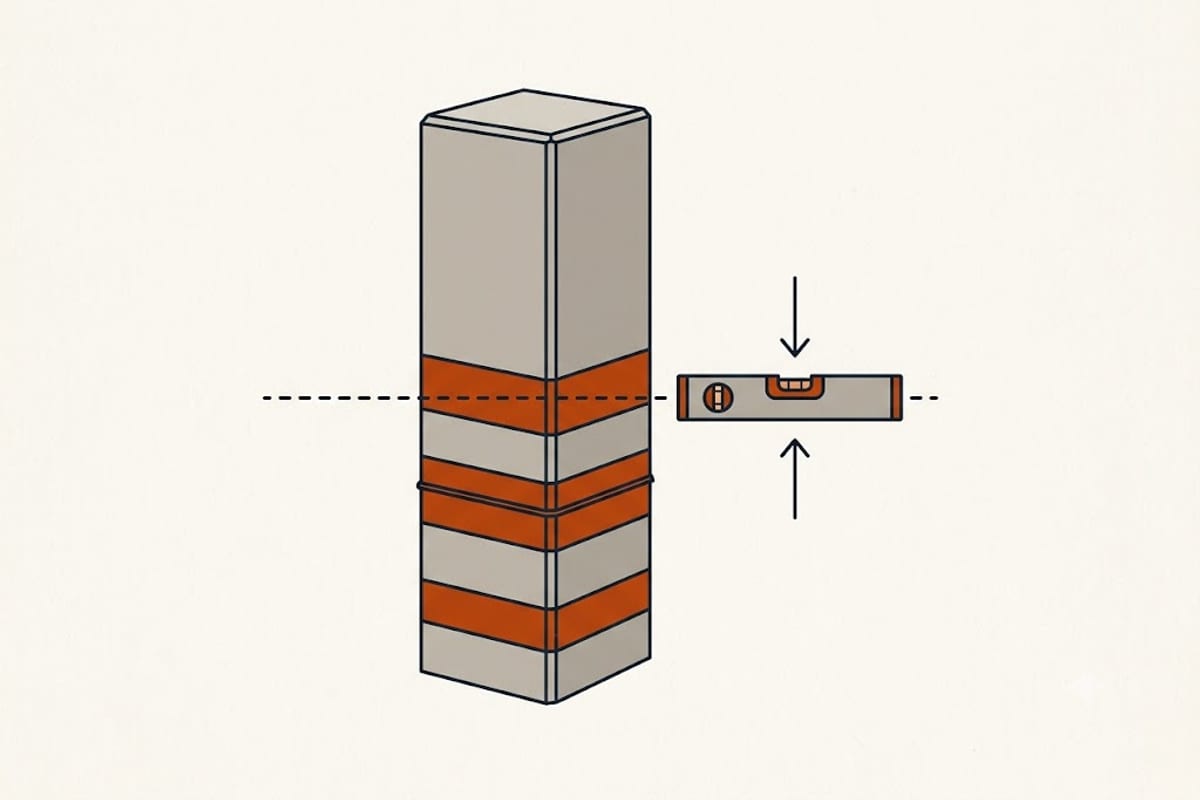
If the trench bottom sits close to saturated soil, the effluent reaches groundwater with that work unfinished. That is a public health issue rather than an aesthetic one, and it is why jurisdictions specify a minimum vertical separation — commonly two to four feet — between the trench bottom and the seasonal high water table or bedrock.
How the seasonal high is determined
Not by digging in August and finding it dry.
Redoximorphic features — mottling — record it. Where soil is saturated for long enough, iron and manganese are reduced, move, and re-precipitate, leaving grey depletions and orange-brown concentrations.
The highest depth at which those features appear marks how high the water gets in a normal wet season. A soil scientist reads it from a pit or a boring, and it is far more reliable than a single observation.
Monitoring wells are used where the interpretation is disputed, recorded through the wet season.
Why a perc test alone is not enough
A percolation test measures how fast water moves into the soil at one depth on one day.
It says nothing about the depth to seasonal saturation, nothing about a restrictive layer below, and nothing about the soil's texture and structure.
That is why most jurisdictions now require a soil evaluation — a described profile — either alongside the perc test or instead of it.
Timing rules
Several states restrict when testing may be done, specifically to catch the wet condition: a defined season, or a requirement for antecedent rainfall.
A test performed outside that window may not be accepted, and one accepted on a dry-season observation can produce a system that surfaces in its first spring.
What to do about a shallow water table
A mound system, which builds the required separation above natural grade in imported sand.
A shallow, wide field placed higher in the profile, where the rules permit.
Pre-treatment — a sand filter or an aerobic unit — producing effluent clean enough that a reduced separation is permitted in some jurisdictions.
Drainage, in limited circumstances and subject to approval, though intercepting groundwater has its own consequences.
A different part of the lot, which is the first thing to try and often the cheapest.
Buying land
This is the item that most often turns a building lot into a field.
Before purchase, a soil evaluation and a perc test, performed to the county's standard and reviewed by the health department, is the only reliable answer — and a purchase contract can be made contingent on it.
Neighbouring lots are not evidence. Soils, and depth to water, vary over very short distances.
Living with a marginal site
A system built on a site at the edge of the requirements has less margin than one on good ground.
That means water conservation matters more, hydraulic overload matters more, and the wet season is when to watch for surfacing. It also means the reserve area is not theoretical — it is where the system will eventually move — and protecting it from compaction, paving and planting is a long-term obligation rather than a formality.
Records held by the county
The health department holds the soil report and the permit for every approved system in its jurisdiction.
For an existing house, that file says what the site was found to be, what separation was achieved and what the system was designed for. It is public information and it is the cheapest research available before buying.