Drainfield & Trenches
Square feet and linear feet of trench from the perc rate and the soil.
5 articles
Laying out a 750 ft² drain field in 2 ft trenches
750 ft² of absorption in 2 ft trenches
375linear feet of trench
4 trenches of about 94 ft, needing roughly 1,875 ft² of ground
| Total trench length | 375ft |
|---|---|
| Number of trenchesno single run past 100 ft | 4 |
| Length of each | 94ft |
| Centre-to-centre spacingthree times the trench width, never under 6 ft | 6ft |
| Width of the field | 20ft |
| Ground the field occupiesbefore setbacks and before the reserve area | 1,875ft² |
| Absorption area required | 750ft² |
Notes
- A trench longer than 100 ft does not work, it just looks like it does. Effluent enters at one end and the near end takes almost all of it. The far end stays dry for years, then the near end clogs and the whole run fails at once. 750 ft² at 2 ft wide is 375 ft of trench, so it goes in as 4 runs with a distribution box splitting the flow.
- The distribution box is the cheapest part and the most common failure. It has to be dead level, and it settles. One trench then takes more than its share and fails while the others sit idle. Level it on undisturbed soil or a concrete pad, and fit flow levellers in the outlets — a few dollars against re-digging a field.
- Absorption area is measured on the trench floor. 750 ft² ÷ 2 ft of width = 375 ft. Some states let you count sidewall area as well, which cuts the length substantially; most do not. Ask the county which convention applies before laying anything out, because the two answers differ by a third.
- Reserve a second field of the same size. Most counties require it on the plan and will not permit without it, and the ones that do not require it still leave you nowhere to go when the first field reaches end of life in twenty to thirty years. Do not put the driveway, the pool or the shed on it.
- Nothing heavy drives on a drain field, ever. Compaction closes the soil pores the whole system depends on, and it cannot be reversed by digging it back up. Keep vehicles, stacked materials and livestock off it, and plant grass — not trees, whose roots find the perforations and fill them.
Drain field trench layout
16 calculations · browse all
- Laying out a 300 ft² drain field in 2 ft trenches
- Laying out a 300 ft² drain field in 3 ft trenches
- Laying out a 450 ft² drain field in 2 ft trenches
- Laying out a 450 ft² drain field in 3 ft trenches
- Laying out a 600 ft² drain field in 2 ft trenches
- Laying out a 600 ft² drain field in 3 ft trenches
- Laying out a 750 ft² drain field in 2 ft trenches
- Laying out a 750 ft² drain field in 3 ft trenches
- Laying out a 900 ft² drain field in 2 ft trenches
- Laying out a 900 ft² drain field in 3 ft trenches
- Laying out a 1000 ft² drain field in 2 ft trenches
- Laying out a 1000 ft² drain field in 3 ft trenches
- Laying out a 1200 ft² drain field in 2 ft trenches
- Laying out a 1200 ft² drain field in 3 ft trenches
- Laying out a 1500 ft² drain field in 2 ft trenches
- Laying out a 1500 ft² drain field in 3 ft trenches
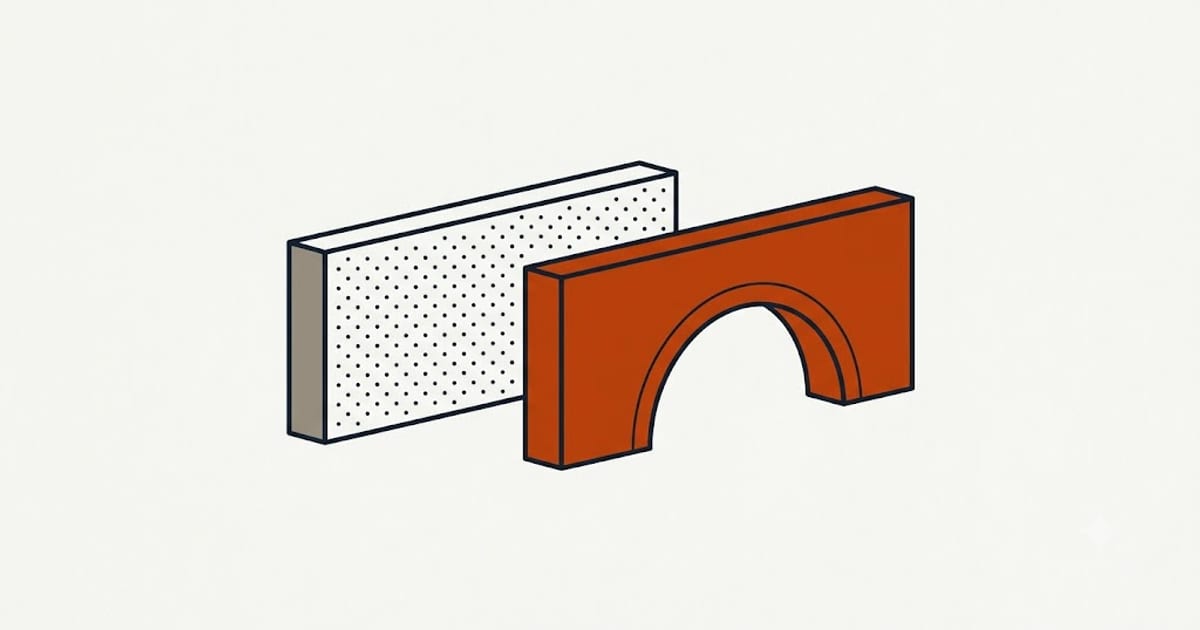 Chambers or Gravel — Two Ways to Build a Drainfield
The gravel in a conventional trench occupies space that could have been storage, and that is most of the argument.
 The Distribution Box — A Small Part That Fails Whole Fields
Half the field is soaked and half has never been wet, and the cause is a concrete box the size of a bucket.
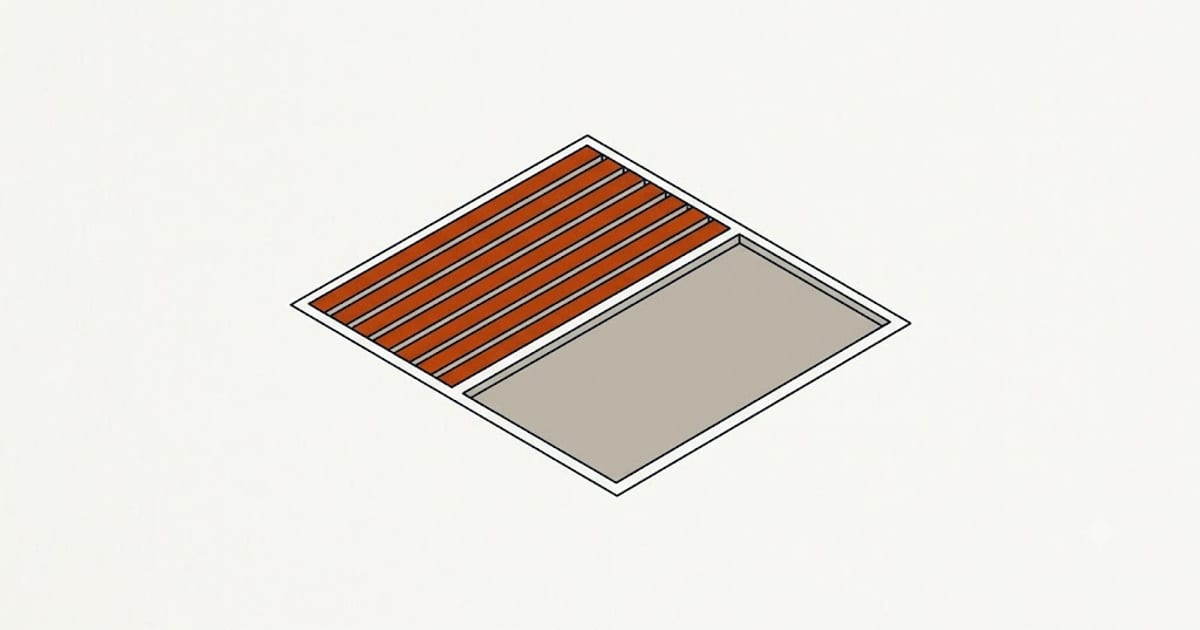 Replacing a Drainfield — Why the Reserve Area Matters So Much
Fields have a design life. The reserve area is the plan for what happens at the end of it.
 Sizing a Drainfield — Design Flow Divided by Application Rate
The tank is the cheap part. The field is where the money and the failures are.
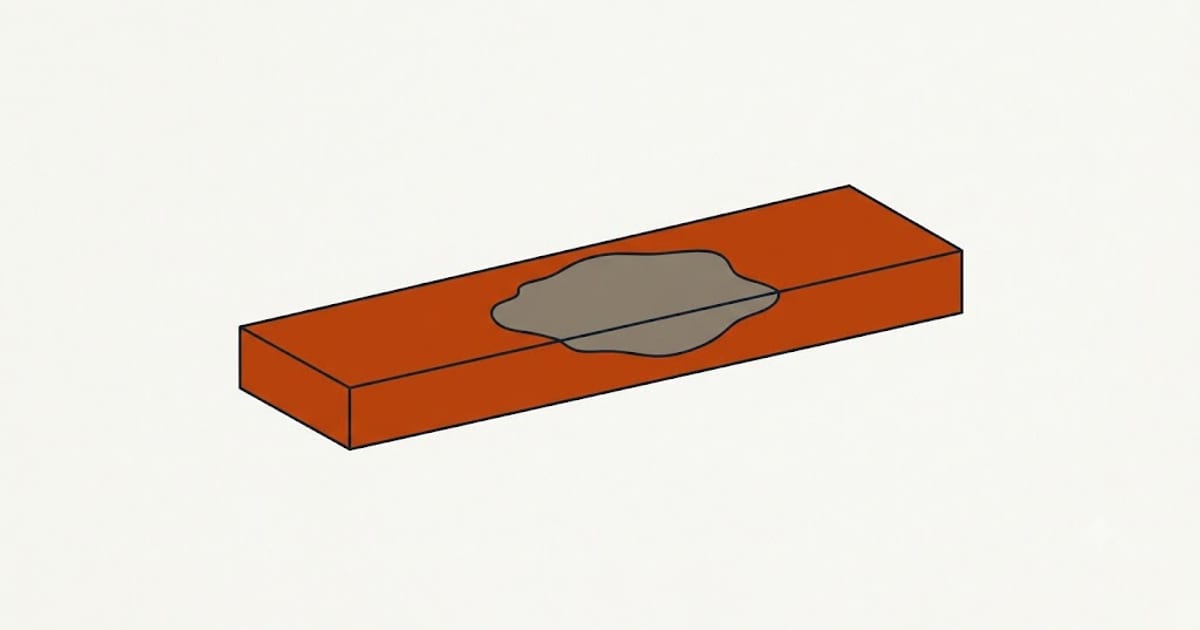 Six Signs a Drainfield Is Failing
The field does not announce itself. It gets slowly worse and then, one wet spring, it surfaces.