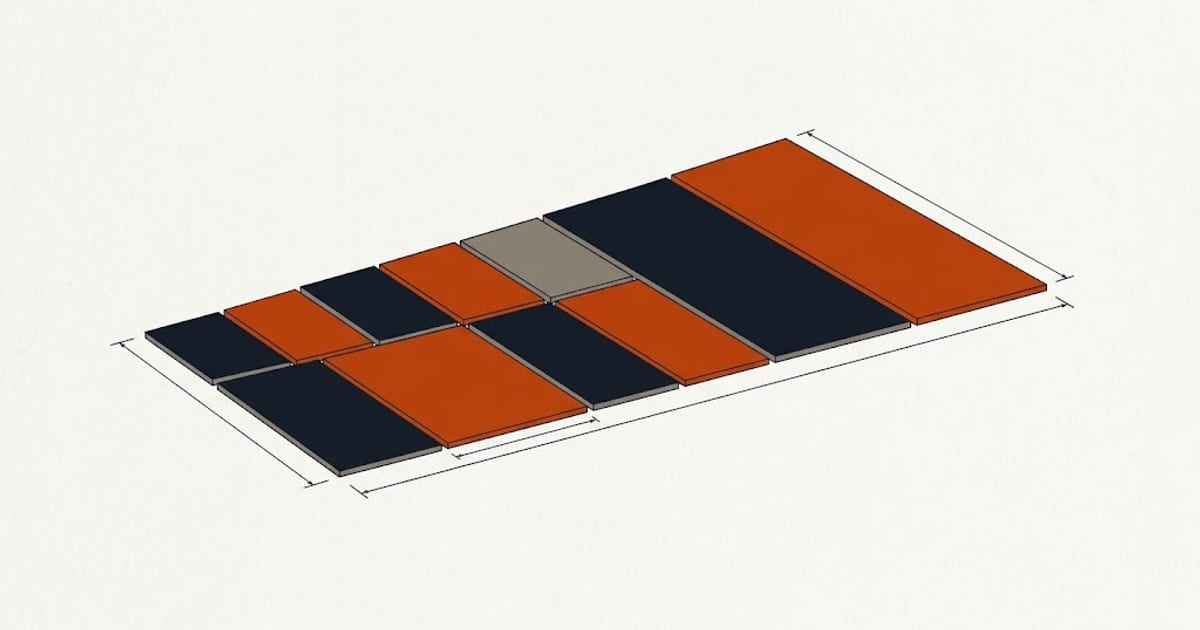
Septic systems are sized on the number of bedrooms in the dwelling, and that choice is deliberate.
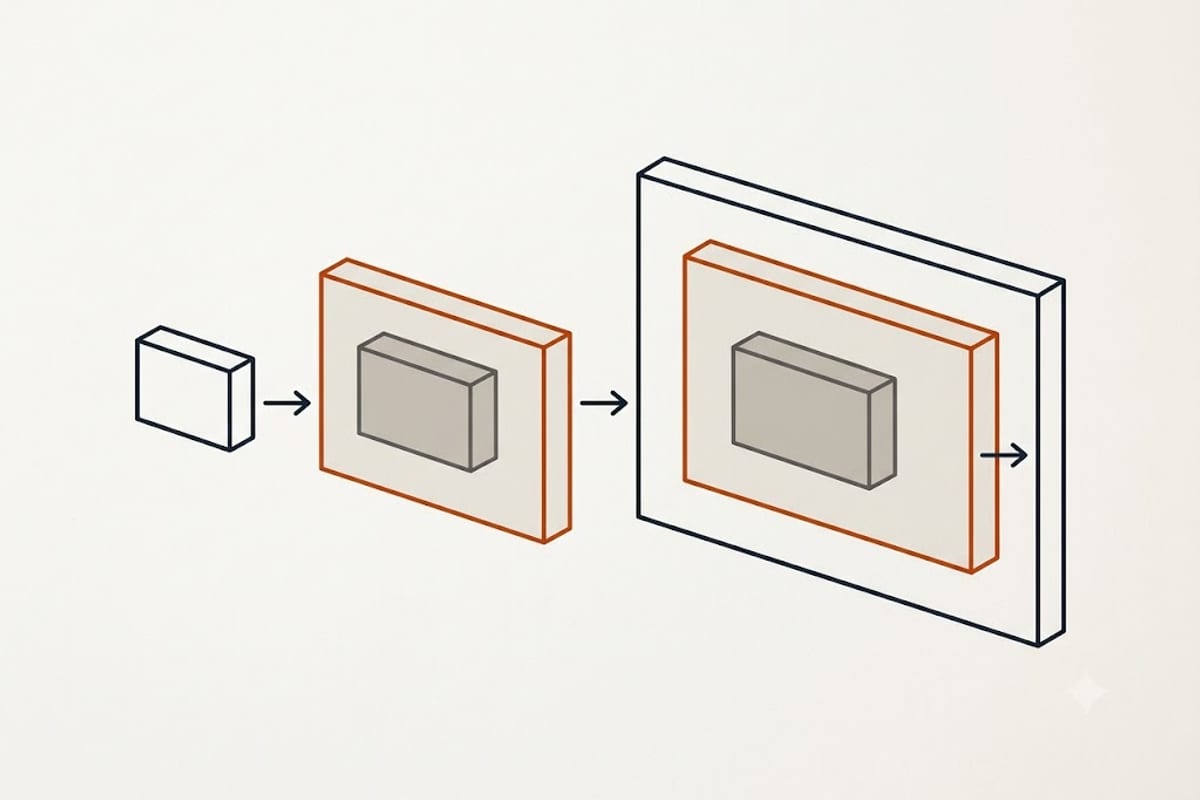
Why bedrooms
A bedroom is a permanent feature of a house. Occupants change; the house does not.
Sizing on bedrooms means the system is adequate for any reasonable household that might occupy it, including the next one. It is also a number an inspector can count without asking anybody anything.
The design flow is typically taken as 100 to 150 gallons per bedroom per day, depending on the jurisdiction.
The common minimums
Requirements are set by state and county, and the widely used pattern is:
| Bedrooms | Minimum tank |
|---|---|
| 1–3 | 1,000 gal |
| 4 | 1,250 gal |
| 5 | 1,500 gal |
| 6 | 1,750–2,000 gal |
Your local health department's table is the one that governs, and several states set higher minimums than these.
What the tank actually does
Settling. Solids sink to form sludge; grease and light material float as scum. The clarified liquid in the middle flows out to the drainfield.
Retention time is what makes that happen, and it is the reason tank size matters. A tank too small for the flow passes solids through before they settle, and solids reaching the drainfield are what destroys it.
Anaerobic digestion, which reduces the sludge volume over time — slowly, and not enough to avoid pumping.
Two compartments
Most current tanks have two chambers with a baffle between them.
The first does the bulk of the settling; the second provides a quieter zone so anything stirred up does not carry straight to the outlet. It is a meaningful improvement and it is standard in new work.
The effluent filter
A cartridge on the outlet that catches solids escaping the tank.
It is inexpensive, it protects the drainfield — the expensive part of the system — and it needs rinsing when the tank is pumped. A backing-up system with a recently pumped tank is frequently a blocked effluent filter, which is a ten-minute job.
Any tank without one should get one at the next pumping.
Adding a bedroom
Converting a study or finishing a basement room with a closet and a window can constitute adding a bedroom for permitting purposes.
That triggers a review of the septic system, and the tank and the drainfield may both need enlarging. It is a common and expensive surprise in a renovation, and it is worth establishing before the plans are drawn rather than after.
Where a larger tank helps beyond the minimum
Heavy or peaky use — a household that does all its laundry on one day.
A garbage disposal, which substantially increases the solids load and, in some jurisdictions, requires a larger tank.
A whirlpool tub or a large soaking tub, which delivers a very large slug of water at once.
Going up a size at installation is a modest cost against the tank's whole life, and it buys retention time, which is what protects the drainfield.
What a bigger tank does not fix
An undersized or failing drainfield. The tank and the field are sized together, and the field is where systems actually fail.
Excessive water use. A tank cannot absorb a flow the field cannot accept.
Solids that should never have entered — wipes, grease, and anything else that does not break down.
Concrete, plastic and fibreglass
Concrete is the traditional material, heavy, durable, and vulnerable to corrosion at the top where sewer gases collect. Most existing tanks are concrete.
Polyethylene and fibreglass are lighter, easier to place on a difficult site, and they must be installed with attention to backfill and to buoyancy — an empty plastic tank in a high water table can float.
Both are acceptable where listed and installed to the manufacturer's instructions.
Risers and access
A tank buried with its lids under a foot of soil is a tank nobody inspects.
Risers to grade with secure lids turn pumping and filter cleaning into a routine job, and they cost little at installation or at the next pumping. They are among the best small investments in a septic system, precisely because they make maintenance likely to happen.