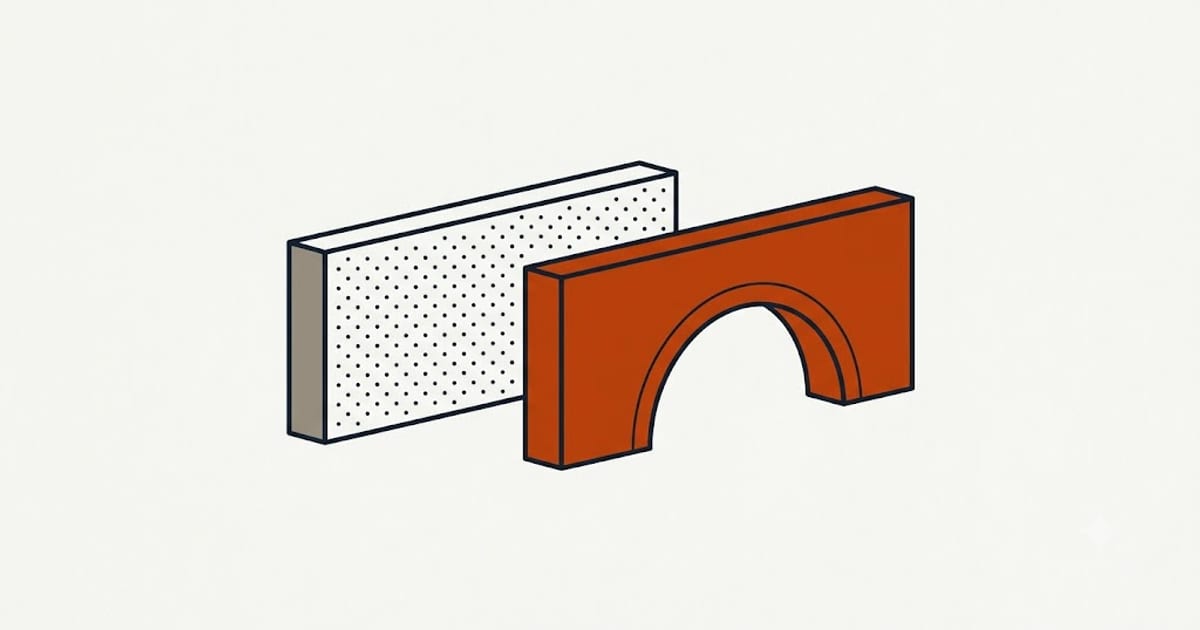
The trench is where effluent meets soil, and there are two common ways to hold it open.
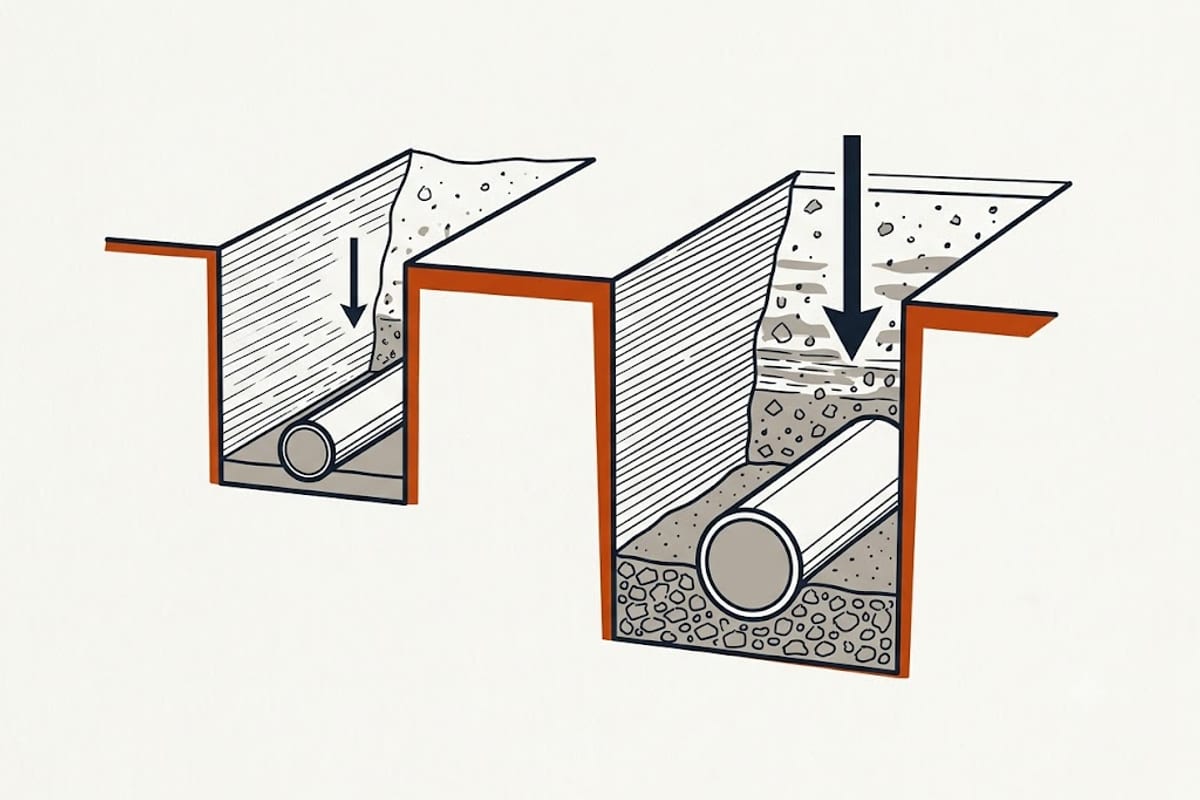
Gravel and pipe
The traditional construction: a trench, a bed of washed stone, a perforated pipe laid in it, more stone over, then a permeable barrier and backfill.
The stone holds the trench open, distributes effluent along its length and provides some storage volume.
The problems: stone occupies most of the trench volume, so storage is limited; fines from the stone or from the excavation can clog the soil interface; and it is heavy, expensive to haul, and slow to place.
Chambers
Open-bottom plastic arches laid end to end in the trench, with no stone.
The advantages: the entire trench bottom is open soil rather than stone-filled, storage volume is much greater for the same excavation, there are no fines to clog the interface, and they are light and quick to install with no aggregate deliveries.
Area credit. Because the open bottom performs better than a stone-filled trench, many jurisdictions permit a reduction in the required absorption area for chamber systems — commonly a meaningful percentage. On a site where field area is the constraint, that credit can be what makes a system fit.
The cost of the chambers themselves is higher than stone, and the saving on hauling and labour frequently offsets it.
Other constructions
Bundled synthetic aggregate — polystyrene or geosynthetic media around a pipe, in a mesh sleeve. Very light and quick, and it is essentially a stone substitute with the same geometry.
Drip dispersal — small-diameter tubing with emitters, distributing effluent over a wide shallow area. Excellent on difficult sites and requires a pump, filtration and periodic flushing.
Pressure distribution — a pump and laterals with small orifices, delivering effluent evenly across the whole field rather than letting it run to the near end. Required on many alternative systems and a genuine improvement on any sloping site.
What matters more than the choice
Level trenches. A trench that slopes concentrates the flow at the low end and overloads it.
Undisturbed soil at the bottom. Excavating in wet conditions smears the soil and seals the interface before the system is even used. Good installers will not dig a field in the wet.
Protection from compaction during construction, which means keeping machinery off the field area once it is dug and afterwards.
The correct depth, maintaining the required vertical separation from groundwater or bedrock.
Any of these done badly will outweigh the difference between chambers and gravel.
The reserve area
Whatever the construction, most jurisdictions require an undisturbed reserve area for a future replacement field.
It has to be protected as carefully as the field itself, and it is the thing that turns a failure into a manageable project instead of a crisis.
Which to choose
Where the local rules give an area credit for chambers and the site is tight, chambers.
Where stone is local and cheap and area is not constrained, either works.
The installer's familiarity matters too: a system built well in the material the crew knows is better than one built awkwardly in the material a brochure preferred.
Locating it later
Whatever the construction, the field's position should be recorded on an as-built drawing filed with the permit, and it is worth having a copy.
Fields get built over, driven on and planted because nobody knew exactly where they were. Marking the corners on a site plan takes minutes at installation and saves a great deal afterwards.
Life expectancy
A well-built, well-maintained conventional field commonly lasts twenty to thirty years before the biomat at the soil interface reduces its capacity beyond use.
That is not a failure of construction; it is the design life. Knowing roughly where a system sits in that span is what turns a replacement into a planned project rather than an emergency, and it is one of the more useful things an inspection establishes.